


Why CCTV Drain Surveys Are Essential
Our engineers encounter drain problems time and again during CCTV Surveys.
A slow-draining sink, a leak, or a recurring blockage might point to several different issues. Guessing wrong can mean unnecessary digging, wasted money, and disruption to your day.
This is where our CCTV drain surveys earn their keep as the first step to figuring out what’s wrong. By sending a camera directly into the pipework, our engineers can identify defects accurately, rule out problems that don’t exist, and confirm ones that do.

Common drain issues we come across
- Tree Root Ingress
Roots grow toward sources of moisture, and a drain carrying warm, nutrient-rich water is an obvious target. Even the smallest hairline crack or slightly open joint gives roots a way in, and once inside, they don’t stop growing fine root hairs thicken over time into dense masses that can fill a pipe entirely.
- Cracked Drain Pipes
Cracked pipework is usually the result of ground movement, heavy traffic loading above the pipe run, ageing pipework nearing the end of its service life, freeze-thaw cycles, or poor installation from the outset. A crack rarely stays small water ingress, root pressure, and ground movement all work to widen it over time.
- Displaced Pipe Joints
Displaced joints occur when sections of pipe shift out of alignment, usually due to ground movement or poor original installation. Once displaced, the gap becomes an entry point for roots, allows water leakage out of the system, and permits soil infiltration into the pipe. This is common across clay, concrete, and PVC pipework alike, though older clay and concrete systems are especially prone to it.
- Collapsed Drains
A collapse can mean complete structural failure, a partial collapse, or simple deformation of the pipe shape. Common causes include vehicle loading, age, poor bedding at installation, and subsidence. Whether relining is possible or full excavation is required depends on the extent of the collapse a localised partial collapse can often be relined.
- Fat, Oil and Grease Build-Up
Cooking oils, fat deposits, and soap residue coat pipe walls and build up layer by layer until flow is severely restricted. This is especially common downstream of commercial kitchens. High-pressure water jetting is the standard solution, clearing this build-up and descaling the pipe walls back to bare pipe.
- Scale and Mineral Deposits
In hard water areas, mineral scale gradually reduces the internal diameter of a pipe, restricting flow. This is particularly common in older cast iron systems. Mechanical descaling clears the deposits, and thorough cleaning is essential before any relining work, since a lining will only bond properly to a clean pipe wall.
- Deformed Pipe
Deformed pipes show up as a loss of the pipe’s original round shape caused by ground pressure compressing the pipe over time. This is most often seen in flexible plastic drains, which can move and compress under load in a way that rigid clay or concrete pipes don’t.
- Corrosion
Corrosion affects cast iron drains directly and causes concrete deterioration through chemical attack, particularly in industrial drainage systems. Left unaddressed, corrosion steadily weakens the structural strength of the pipe.
Is Excavation Necessary?
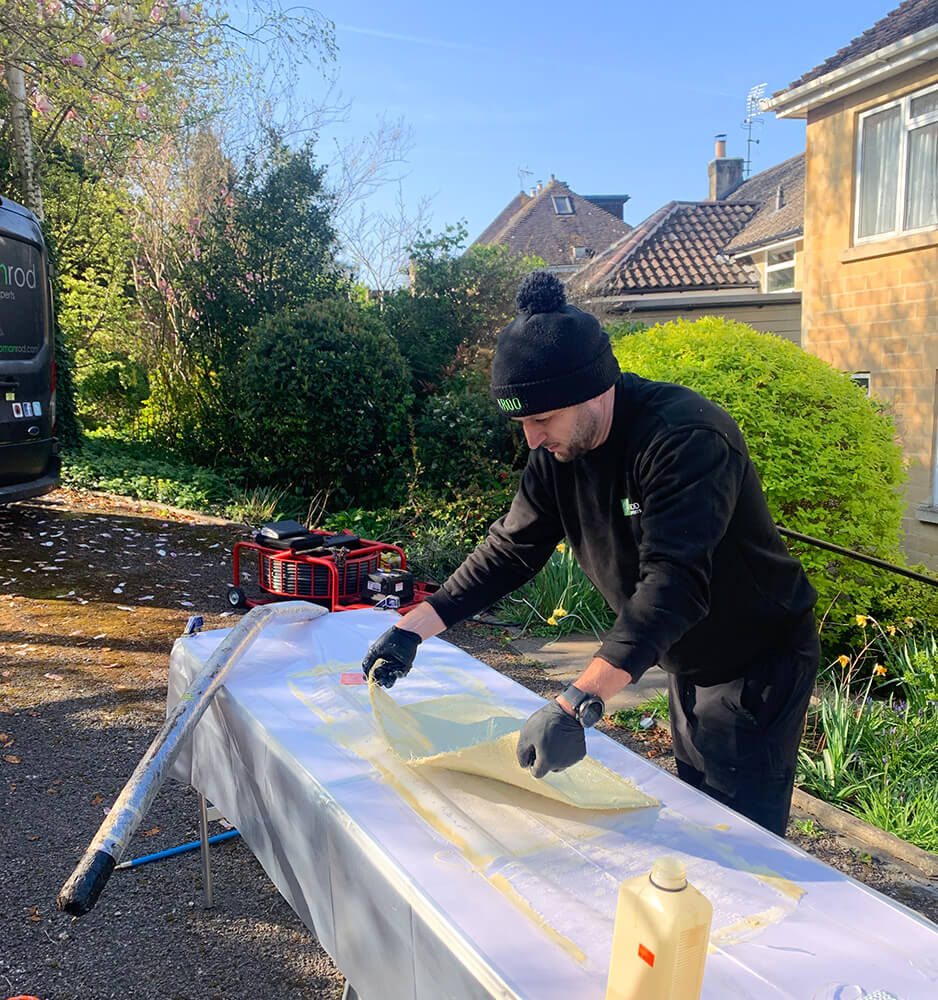
No-dig repair is our preferred option wherever it’s viable. Drain re-lining is a no-dig method of repairing damaged underground pipes. Using flexible resin-soaked liners or targeted patch repairs, we can restore the structure of your pipework without excavation.
Many companies shy away from structural patch repairs, but we specialise in them. Whether it’s a tight access point, multiple junctions, or a tricky location (under extensions, shared runs, etc), our experienced team handles the jobs others walk away from.
Our engineers are trained in pipe structure, flow dynamics, and material compatibility. So every liner is cut, mixed and fitted precisely.
How Drain Lining Works
How Our Engineers Diagnose Drain Problems
Every survey follows the same structured process:
- Book a Visit – Quick scheduling with clear pricing.
- Survey Day – Our team arrives with HD camera equipment and records findings.
- Professional Findings – We create a clear, written summary of all findings, simple to understand PDF Report with photo stills & video.
- Recording footage – for reference and reporting
- Next Steps – If issues are found, we quote for repairs or re-lining or general aftercare.
- Written report – Summarising findings and next steps
This approach allows us to recommend the right fix the first time, whether that’s root cutting, high-pressure drain jetting, patch lining, full relining, or excavation.
Get in touch!
Got drain problems? Our family-run team at Roman Rod has been personally serving homeowners and commercial properties for 40+ years. In that time we’ve earnt 5-star reviews from our clients across:
We specialise in CCTV & structural drain repair service including drain unblocking, CCTV drain survey, drain repairs & re-lining, root clearance, manhole replacement and commercial drainage services.
With no hidden costs and no call-out fees, why wait? Get a free quote today, give us a call today on 0800 222 9120 or email us info@romanrod.com. You’ll recognise our van, uniform, and professional service that makes us Bath, Somerset and Wiltshire’s go to drainage experts.